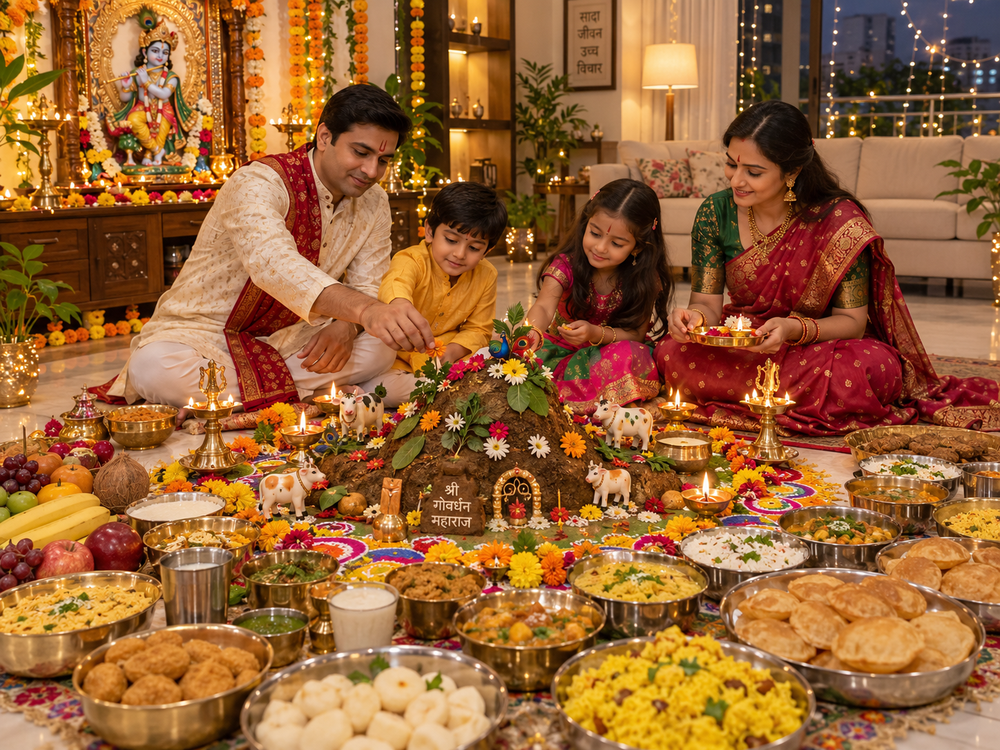
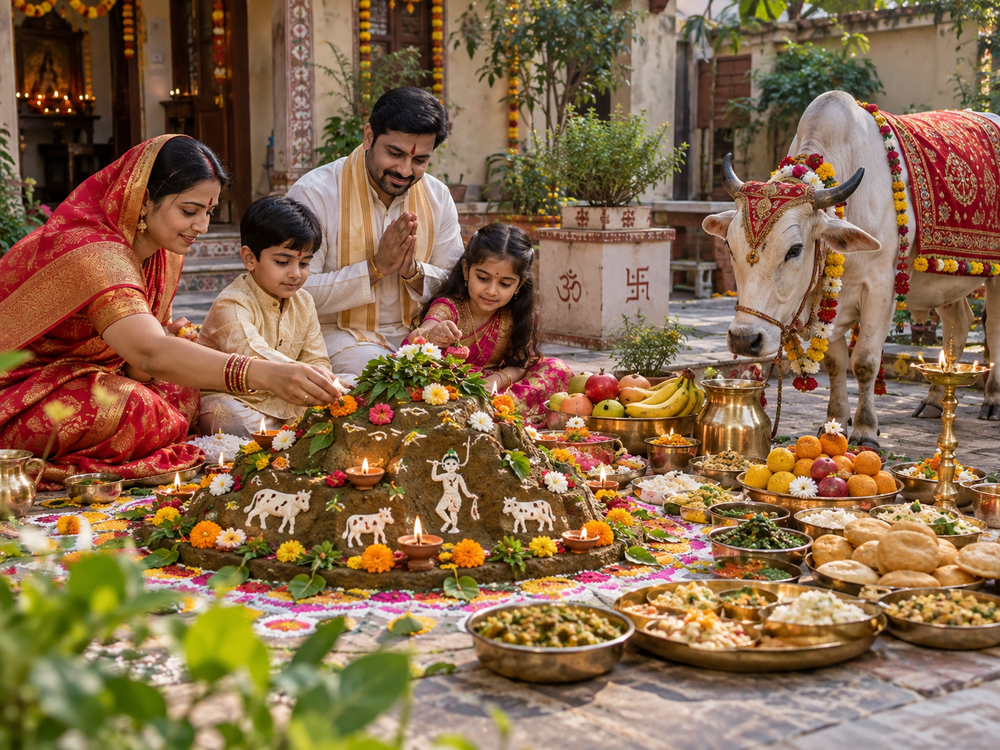
Goverdhan Puja draws families together in remembrance of Krishna’s protection and nature’s abundance.
Why Govardhan worship matters
Govardhan represents the landscape that nourishes a village: pasture, clean water, trees, cattle and soil. Krishna’s sheltering act is remembered as protection of the whole community, not only the powerful.
By celebrating a mountain of food, devotees recognize abundance as something to be thanked for and shared. Humility, charity and respect for nature are woven into the puja.
The Govardhan tradition links devotion with gratitude for land and living beings.
Puja samagri and preparation
Essential puja samagri
Krishna picture or murti, clean cloth and puja thali
Cow dung or clay for a symbolic hill, where customary
Fresh flowers, leaves or grass, small diya and incense
Water, sandalwood or kumkum if used in your tradition
Prepared vegetarian bhog, fruit and sweets
Tulsi leaves where appropriate to the family’s practice
Before you begin
Clean the space, prepare offerings with food safety in mind, and keep open flames away from fabrics and children. Temple and regional customs differ, so use this as a general framework, not a mandatory ritual formula.
Seven steps of Govardhan Puja
This practical sequence expands the source guide’s rituals into a clear home-puja flow. Different temples and families may follow a different order.
Prepare a clean prayer space
Clean the puja area, arrange a cloth or small altar, and place a picture or murti of Shri Krishna. Families may also prepare a courtyard space for a symbolic hill.
Create the Govardhan representation
Traditionally the hill is modeled from cow dung; clay or other locally appropriate materials can be used. Adorn it with grass, flowers, a peacock feather, and small images representing cattle or villagers.
Prepare the Annakut bhog
Cook vegetarian dishes according to family custom: grains, vegetables, lentils, fruit, milk-based foods and sweets. Some temples prepare Chhappan Bhog, traditionally described as fifty-six offerings; a modest family offering is also meaningful.
Offer prayers to Krishna and Govardhan
Light a diya safely, offer flowers, incense where appropriate, water and tulsi leaves in traditions that use them. Sing Govardhan-related bhajans and express gratitude for food and shelter.
Perform a symbolic parikrama
Walk respectfully around the decorated Govardhan representation where there is safe space. At the sacred hill in Braj, some devotees undertake an outdoor parikrama; practices vary by tradition.
Honor cattle and the natural world
Where appropriate and safe, families show care for cows and other animals. Treat the landscape and resources sustaining the community with the same spirit of appreciation.
Share the prasad
After offering bhog, distribute the meal respectfully to family, neighbors and guests. Food sharing is an important expression of community.
Annakut: the offering of abundance
Annakut is arranged as a festive vegetarian bhog and later shared as prasad.
Annakut literally suggests a “mountain of food.” Temples often present a broad assortment of grains, vegetables, lentils, milk products, fruits and sweets in beautifully arranged tiers.
The related term Chhappan Bhog refers to fifty-six varieties of offerings. The number is part of devotional tradition, not a universal household requirement. Families may prepare fewer dishes according to time, means and custom.
After the offering, the dishes are received and distributed as prasad. This is a celebration of generosity as much as a celebration of abundance.
20 Govardhan Puja wishes and blessings
Copy a wish and share it with family or friends. These are celebratory greetings rather than scriptural citations.
May Krishna shower you with joy, success, and blessings this Govardhan Puja.
Have a joyful Govardhan Puja. May your faith bring you serenity.
Joyful Annakut! May the feast of abundance bless you with a year of happiness.
Honor the strength of nature and the victory of true dedication.
Find strength in Govardhan Hill's miracle to overcome life's trials.